
Insight
Canoeing is a way to sit still and pay attention.





|
InsightCanoeing is a way to sit still and pay attention.
|
Canoe TripsBoundary Waters:
Boats & GearBoundary Waters Gear ListWenonah Prism (sold)
|
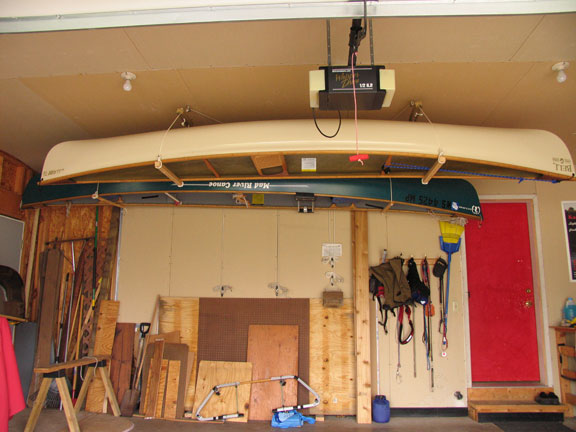
Canoe Storage in the GarageI have three canoes that live outside and another six that live in the garage. The inside boats all have wood trim and keeping them out of the weather preserves the finish. Following are a few pictures showing how they're stored. They are in a standard two-car garage with a couple extra feet on each side. To begin with, here are two boats placed across the width of the garage. Since this picture was taken they've been moved closer and a third boat added between the garage door opener and the light bulbs. It's snug.
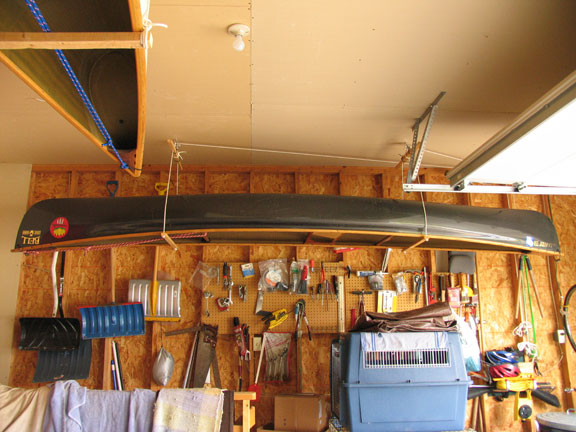
One boat is hung lengthwise to the right of the ones in the first picture.
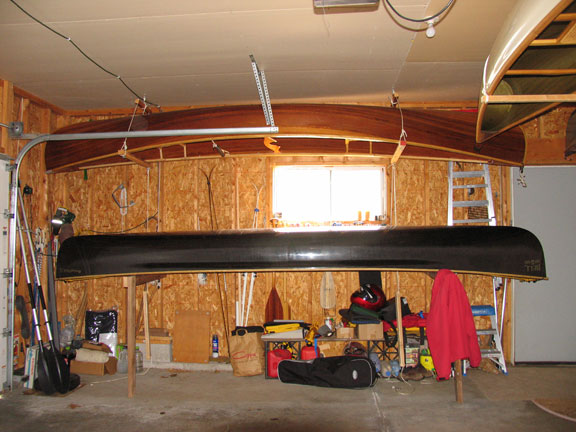
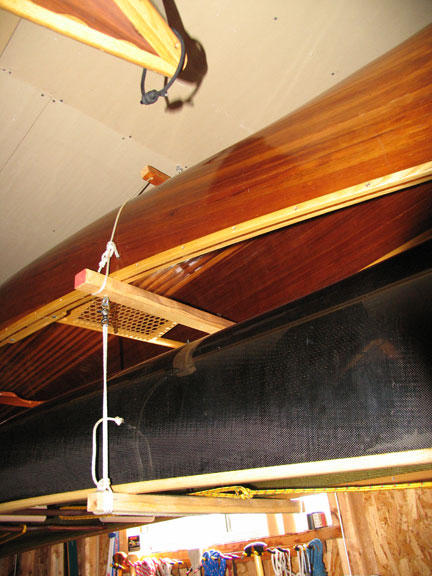
On the other side of the garage two boats are hung piggy-back. There are two brackets below the hangers (one of which has a red jacket on it) that hold the lower boat while it's being prepared for storage. These brackets fold against the wall when not in use.
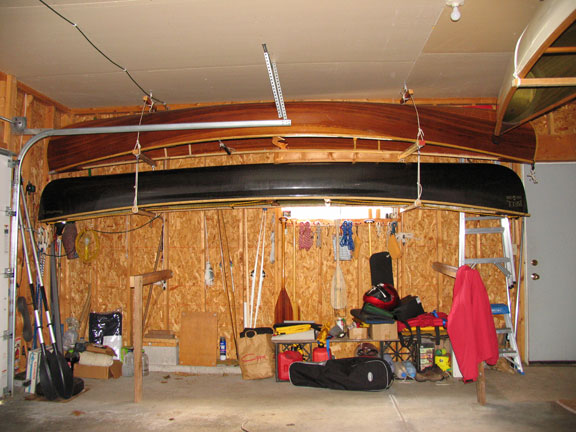
The lower boat is now in place.
Another shot of the double hanger. If you look closely you can see the snap shackle on the end of the lower boat's hanging line; that eliminates the need for messing with knots.
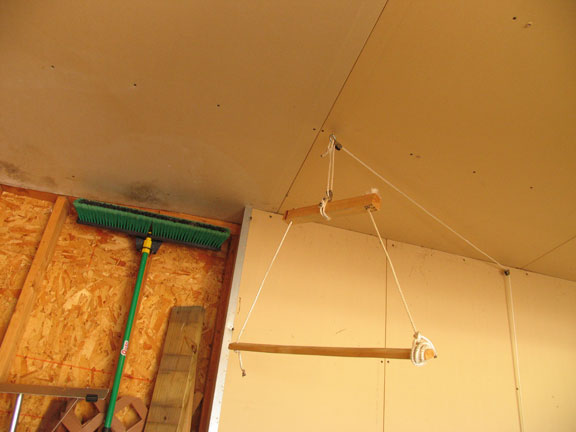
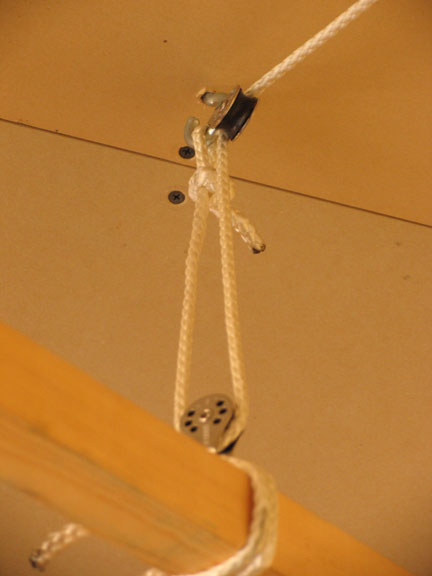
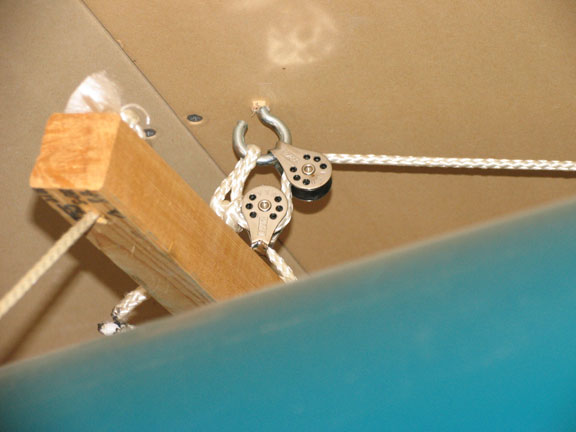
Except for the bottom boat in the piggy-back arrangement, all this is done with ropes and pulleys. This shot shows how each hanger is made. The wood pieces are 2x2's, the ropes are 5/16" braid, and the pulleys are heavy-duty Ronstan sailboat blocks (purchased for about $4.50 each from Defender.com - but they're up to about $8.50 now) - not the lightweight hardware store variety. I believe in safety, and each hanger supports at least 170 pounds, well below the rated strength of the Ronstan pulleys. Hardware store pulleys are rated at about 30 lbs. On the first couple of hangers I made, both 2x2's were the same length, which caused the boats to wobble badly; i.e., their initial stability was very low. With the top ones shorter, they hang level.
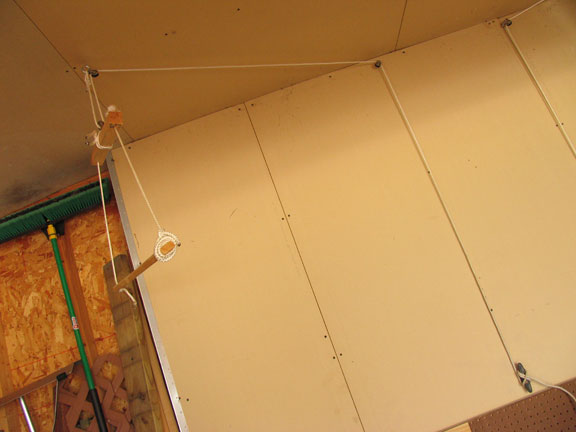
Here you can see the hangers in use. The eye hooks are screwed about 2" into the ceiling joists and support my full weight. They're angled so the ropes come out of the pulleys straight toward the turning blocks (see below).
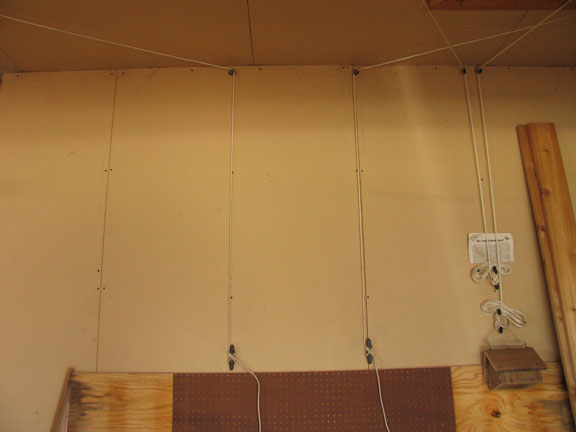
This shows a hanger, two turning blocks, and a cleat. The cleats are screwed about 2" into the wall studs.
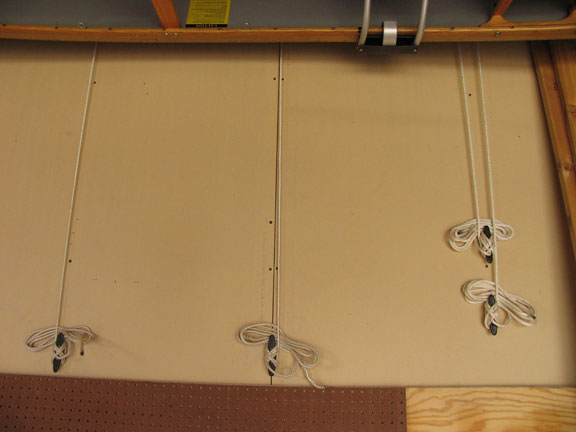
And another shot showing how two boats' hanger lines are cleated on
the wall (there are now three sets on that wall).
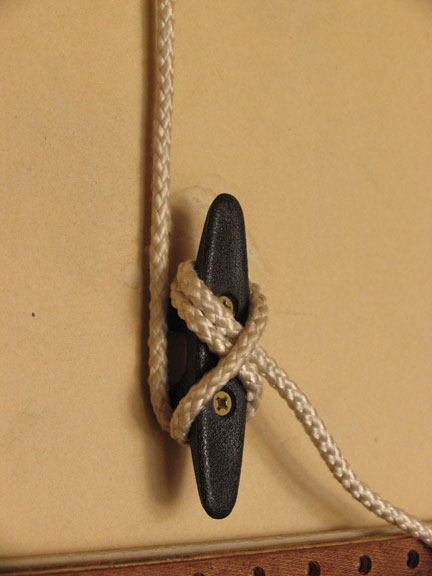
Close-ups of the cleating:
I never leave a boat with only this amount of wrap on the cleat. I always take another turn and half-hitch on the cleat. Feel free to e-mail me with any comments you may have.
|
Comments and suggestions welcome. Feel free to e-mail
me.
Last updated
June 20, 2011
Brought to you by Codabone Productions ©2009